
10 Cities That Are Perfect for Self-Guided Audio Tours
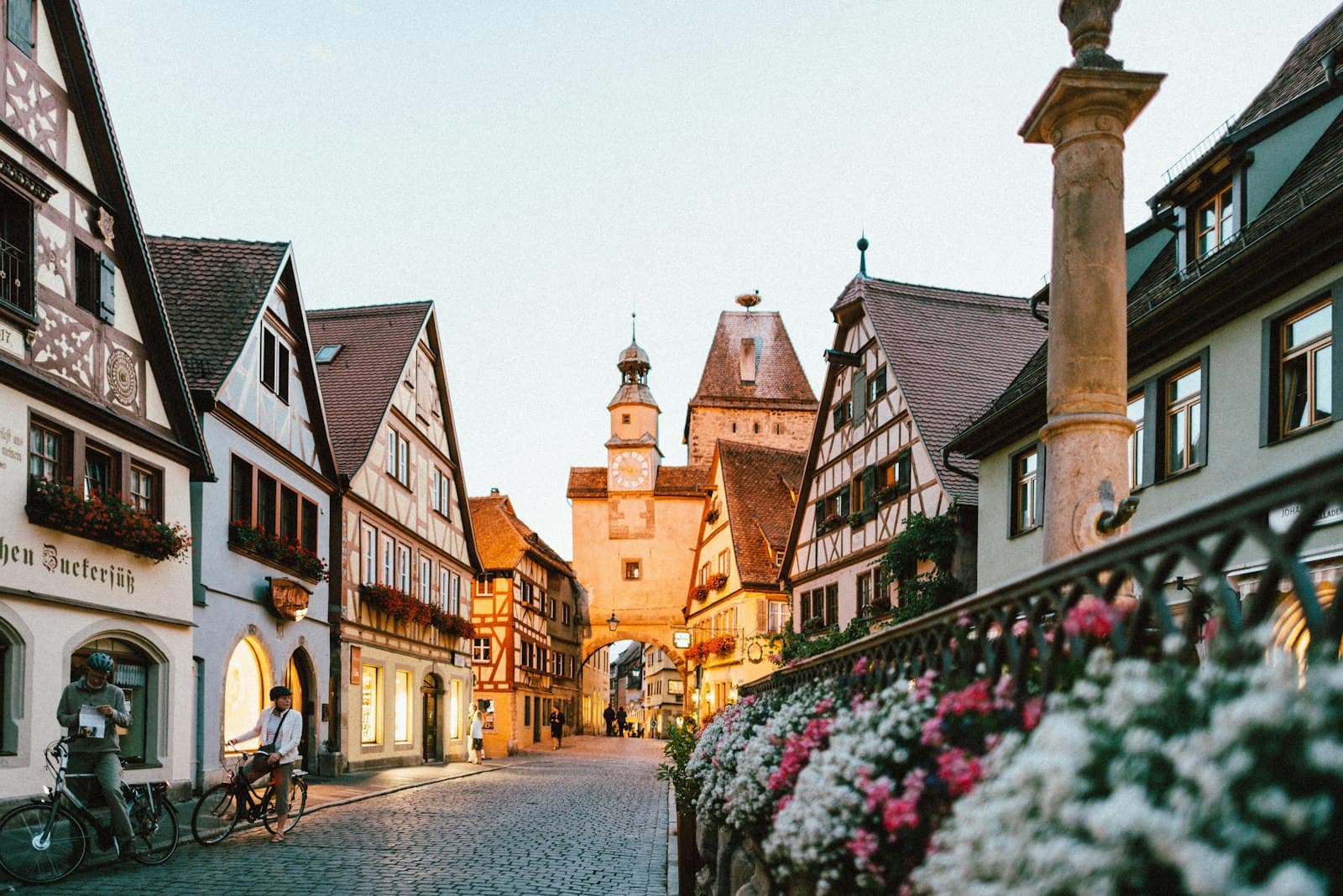
Some cities are made for audio tours. They're walkable, layered with history, full of stories hiding in plain sight, and infinitely more rewarding when someone whispers the context in your ear. These aren't just great travel destinations — they're places where a self-guided audio tour transforms a pleasant walk into something you'll remember for years. Here are ten cities that practically beg to be explored with headphones on.
1. Rome, Italy
Rome doesn't just have history — it has history stacked on top of history, layered like geological strata. Walk down a random side street and you'll pass a medieval church built into the wall of a Roman temple, next to a Renaissance palazzo, across from a Baroque fountain. Without context, it's all beautiful but abstract. With an audio guide, every block becomes a time machine.
The city is wonderfully walkable, with the major historical areas — the Forum, Trastevere, the Jewish Ghetto, Monti — all connected by streets that are themselves full of stories. Rome rewards slow exploration, and there's something almost magical about standing in a quiet piazza at golden hour while a narrator explains the scandal, intrigue, or miracle that happened on that exact spot.
What you'd hear: Standing at the Largo di Torre Argentina — that sunken square with the cat sanctuary — your audio guide would tell you that this is the exact spot where Julius Caesar was assassinated in 44 BC. The cats lounging on ancient columns have no idea they're living in one of history's most dramatic crime scenes.
2. Berlin, Germany
Berlin is a city that has been destroyed and reinvented so many times that its history is written in absences as much as in buildings. The empty lot on your left? That was a department store before the war. The stretch of cobblestones running across the road? That marks where the Wall stood. The brutalist tower block next to the art nouveau apartment? Two different Germanys, side by side.
This is a city where you genuinely need the stories to understand what you're looking at. A beautiful park might be a former cemetery. A sleek corporate building might stand where a family was torn apart. Berlin doesn't wear its past on its sleeve — it buries it, paves over it, and turns it into something new. An audio guide digs it all back up.
What you'd hear: Walking through the Scheunenviertel, you'd hear about the neighborhood's transformation from Berlin's Jewish quarter to a Nazi-era zone of terror, to an East German forgotten corner, to one of the city's trendiest areas. The same streets, four completely different worlds in less than a century.
3. Lisbon, Portugal
Lisbon's hills are both its charm and its challenge, but they also mean that every ten minutes of walking delivers a new viewpoint, a new neighborhood, a new vibe. From the Moorish alleyways of Alfama to the wide boulevards of Baixa to the creative energy of LX Factory, Lisbon is a city that reveals itself in chapters.
The city's relationship with the sea, the earthquake of 1755 that leveled most of it, the Age of Exploration that funded its grandest buildings, the Carnation Revolution that ended decades of dictatorship — these threads weave through every neighborhood. An audio guide connects them, turning a hilly walk into a narrative that keeps unfolding.
What you'd hear: At the Miradouro da Graça, looking out over the terracotta rooftops, you'd hear about the morning of November 1, 1755 — All Saints' Day — when the city's churches were full of candles and worshippers. Then the earthquake hit, the candles fell, and the fires that followed destroyed more than the quake itself. The city you're looking at was almost entirely rebuilt from the rubble.
4. Paris, France
Everyone knows the Eiffel Tower, the Louvre, and Notre-Dame. But Paris's real magic lives in its arrondissements — each one a miniature city with its own character, history, and secrets. The Marais, where medieval streets meet the city's LGBTQ+ heart. Montmartre, where Picasso painted in a freezing studio. Saint-Germain-des-Prés, where Simone de Beauvoir and Jean-Paul Sartre debated philosophy over coffee.
Paris is an exceptional audio tour city because it rewards granularity. The story changes every two blocks. A building's facade tells one story; the courtyard behind it tells another. The street name references a forgotten event; the plaque on the wall commemorates someone whose life would fill a novel. You could spend a week exploring a single arrondissement and still miss things.
What you'd hear: Walking down Rue des Rosiers in the Marais, you'd hear about the neighborhood's centuries as the center of Jewish life in Paris, the deportations during World War II, the gradual renewal, and the now-legendary falafel rivalry between two shops that stand twenty meters apart — a rivalry so fierce it's practically a local sport.
5. Istanbul, Turkey
No city on Earth straddles two continents, two religious traditions, and so many centuries of imperial ambition quite like Istanbul. Within a single square kilometer, you can move from a Roman hippodrome to a Byzantine church to an Ottoman mosque to a Republican-era monument. The layers don't just coexist — they argue with each other, borrow from each other, and produce something entirely unique.
Istanbul is a city that overwhelms without context. The Grand Bazaar is chaotic and thrilling but makes much more sense when you understand the centuries-old trading traditions behind each section. The neighborhoods of Balat and Fener, colorful and Instagram-friendly, carry the deep history of the city's Greek and Jewish communities. An audio guide turns a sensory overload into a coherent story.
What you'd hear: Inside the Hagia Sophia, you'd hear about the day in 1453 when Mehmed the Conqueror rode his horse through the doors of what was then the world's greatest Christian cathedral and ordered it converted into a mosque — while deliberately preserving the Byzantine mosaics. The building has been a church, a mosque, a museum, and a mosque again, and every layer is still visible.
6. Edinburgh, Scotland
Edinburgh is essentially two cities stacked on top of each other. The medieval Old Town tumbles down from the castle along the Royal Mile, a tangle of narrow closes (alleyways), hidden courtyards, and buildings that have been standing since before Columbus sailed. The Georgian New Town, just below, is all elegant symmetry and orderly crescents. Together, they create a city that's as much about verticality as it is about geography.
The stories here are vivid and often dark — body snatchers, witch trials, plague victims walled up in underground chambers, literary feuds, and the real-life inspirations for Jekyll and Hyde. Edinburgh doesn't do subtle. It does atmospheric, gothic, and occasionally terrifying. An audio guide through its closes and wynds is like walking through a novel.
What you'd hear: Descending into Mary King's Close, you'd hear about the 17th-century plague outbreak that led authorities to quarantine entire streets underground — and the people trapped inside them. The close was sealed for decades, and when it was finally reopened, they found the remains of a city frozen in time beneath the modern streets above.
7. Prague, Czech Republic
Prague survived World War II largely intact, which means its medieval, Renaissance, Baroque, and Art Nouveau architecture exists in an unbroken continuum that few European cities can match. Walk from the Old Town Square to the Charles Bridge to the castle district and you're moving through six centuries of architecture without a single gap.
But Prague's real audio tour appeal goes beyond pretty buildings. This is a city shaped by defenestrations (the Czech solution to political disagreements was apparently to throw people out of windows), by the Velvet Revolution, by Kafka's anxious wanderings, and by a cultural identity that's been repeatedly suppressed and repeatedly resurrected. The stories are dramatic, strange, and often darkly funny.
What you'd hear: Standing at the third window on the second floor of Prague Castle's Old Royal Palace, you'd hear about the Second Defenestration of Prague in 1618 — when Protestant nobles threw two Catholic governors and their secretary out of the window. They survived the 21-meter fall (landing in a pile of manure, though the Catholic Church insisted it was angels who saved them), and the incident triggered the Thirty Years' War.
8. Barcelona, Spain
Barcelona is a city where architecture itself tells stories. Gaudi's buildings aren't just beautiful — they're philosophical statements, religious symbols, and engineering marvels disguised as apartments and churches. But Barcelona's audio tour appeal goes far beyond Gaudi. The Gothic Quarter's narrow streets hide Roman ruins beneath modern shops. The Barceloneta neighborhood carries the memories of fishermen and factory workers. El Raval has transformed from red-light district to cultural melting pot.
The city's Catalan identity — its language, its traditions, its complicated relationship with Madrid — adds a political dimension that makes every neighborhood walk more interesting. Barcelona is a city with something to say, and an audio guide lets you hear it.
What you'd hear: Walking through the Gothic Quarter, you'd learn that many of the "medieval" facades are actually early 20th-century additions, built during a romantic revival that reimagined the neighborhood's history. The genuinely ancient parts — like the Roman walls visible in the basement of the history museum — are sometimes hiding in plain sight while the newer "old" buildings get all the attention.
9. Vienna, Austria
Vienna perfected the art of living well and then spent centuries arguing about music, philosophy, pastry, and psychoanalysis. The city's elegance is immediately visible — the Ring Road, the palaces, the coffeehouses — but its depth requires narration. Behind every ornate facade is a story of imperial ambition, artistic revolution, or personal tragedy.
This is the city where Mozart performed for the empress as a child, where Freud listened to patients on his famous couch, where Klimt scandalized society with his golden paintings, and where the coffeehouse tradition became so essential that it's UNESCO-protected. Vienna rewards the listener who wants to understand why things look the way they do and why they matter.
What you'd hear: Sitting in Café Central, you'd hear that this coffeehouse was so famous as a gathering place for intellectuals and revolutionaries that when someone warned the Austrian government in 1917 that Russia was about to have a revolution, the official reportedly laughed: "And who is going to lead this revolution? Perhaps Mr. Bronstein from Café Central?" Mr. Bronstein, of course, was Leon Trotsky — and he did.
10. Amsterdam, Netherlands
Amsterdam's canal ring looks picturesque and peaceful, but the stories behind those gabled houses involve global trade empires, religious tolerance (and intolerance), artistic genius, wartime resistance, and social experimentation. The city pioneered stock exchanges, religious freedom, and legal cannabis — sometimes in the same century.
Amsterdam is flat, compact, and supremely walkable, making it ideal for self-guided exploration. But it's also deceptively complex. The Jordaan neighborhood was built for workers and immigrants; now it's one of the city's most desirable areas. The Red Light District sits in the oldest part of the city, steps from the Oude Kerk (Old Church). The Anne Frank House neighborhood was an ordinary place where an extraordinary act of courage played out. Context changes everything here.
What you'd hear: Walking along the Herengracht (Gentlemen's Canal), you'd hear about the 17th-century merchants who built these houses with their wealth from the Dutch East India Company — a corporation so powerful it had its own army, could declare war, and at its peak was worth more (adjusted for inflation) than Apple, Amazon, and Google combined.
The common thread
What makes all these cities perfect for audio tours? They share three qualities: walkability (you can explore on foot without exhausting yourself), layers (every street has more than one story to tell), and invisible history (the most fascinating details aren't on any plaque or sign).
An audio guide unlocks what your eyes can't see on their own. It turns a pretty street into a dramatic story, a quiet square into a historical turning point, and a random building into someone's life.
Start exploring
Travee's AI-powered audio guides cover destinations around the world, bringing every street and landmark to life with stories you won't find in any guidebook. Pick a city, put in your headphones, and start walking.