
Weekend Trip to Vienna: 48 Hours of Culture and Coffee
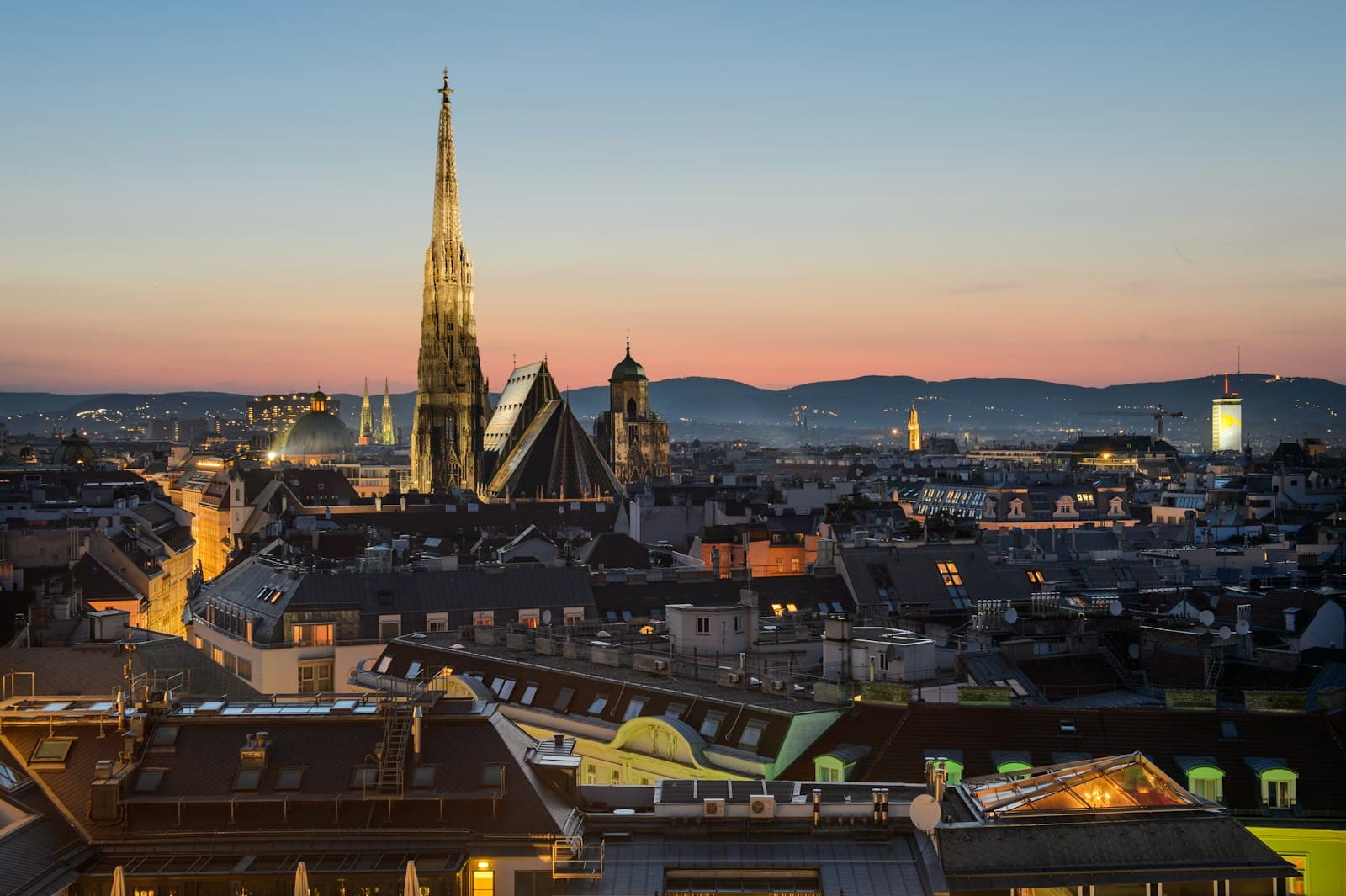
A weekend trip to Vienna delivers something most European capitals can't quite match: imperial grandeur that doesn't feel stuffy, a coffeehouse culture that turns sitting still into an art form, and food that goes way beyond Wiener Schnitzel. In two days, you can see palaces, wander world-class museums, eat cake that's been famous for over a century, and finish the evening with a glass of wine in a candlelit tavern on the city's edge.
Why Vienna works for a weekend
Vienna is compact in the way that matters. The historic center — the Innere Stadt inside the Ringstraße — is walkable in every direction, and most of the big sights cluster within a few square kilometers. The U-Bahn is fast, clean, and runs on time. And unlike cities that save their best experiences for week-long visitors, Vienna gives you a genuine taste of itself in 48 hours.
The key is pacing. Vienna isn't a city for rushing. The Viennese take their coffee slowly, their meals seriously, and their cultural institutions with a mix of pride and nonchalance that's entirely their own. Match that energy, and your weekend will feel rich rather than frantic.
Saturday: Palaces, cathedrals, and coffeehouse rituals
Morning — Schönbrunn Palace
Start early. Head to Schönbrunn Palace before the tour buses arrive — aim for 9:00 AM when the gates open. This was the summer residence of the Habsburgs, and it's massive: 1,441 rooms, though the Imperial Tour (22 rooms, about 40 minutes) gives you the highlights without exhaustion. You'll walk through Maria Theresa's ornate reception halls, Franz Joseph's surprisingly modest study, and the Great Gallery where the Congress of Vienna danced Europe into a new era.
The palace is impressive, but the gardens are where you'll want to linger. The Privy Garden is manicured to geometric perfection, and the walk up to the Gloriette — a hilltop colonnaded arch — rewards you with a panoramic view over the palace, the gardens, and the Vienna skyline beyond. On a clear morning, it's one of the finest views in the city.
Budget about 2–2.5 hours for palace and gardens combined. Take the U4 from the city center to Schönbrunn station — it's a direct ride of about 15 minutes.
Late morning — Naschmarkt
From Schönbrunn, take the U4 back toward the center and get off at Kettenbrückengasse. You'll emerge right at the southern end of the Naschmarkt, Vienna's most famous market. Stretching for over a kilometer along the Wienzeile, it's been the city's culinary meeting point since the 16th century.
Wander through the stalls: Turkish dried fruits, Austrian cheeses, freshly baked bread, olives from a dozen Mediterranean countries, Balkan grilled meats, Vietnamese pho, and Viennese pastries. This isn't a sanitized food hall — it's noisy, crowded, and smells incredible. Stop for a late breakfast or early lunch at one of the market restaurants. Neni am Naschmarkt does excellent Middle Eastern-inspired sharing plates, or grab a plate of fresh oysters and a glass of Grüner Veltliner at Umar if you're feeling fancy.
On Saturdays, the western end of the Naschmarkt turns into a flea market — vintage furniture, old records, antique jewelry, and all sorts of beautiful junk worth rummaging through.
Afternoon — Stephansdom + the Innere Stadt
Walk or take the U-Bahn to Stephansplatz, the heart of Vienna. Stephansdom (St. Stephen's Cathedral) has dominated the skyline since the 14th century, its multicolored tiled roof instantly recognizable. Step inside for free to see the Gothic nave, then pay a few euros to climb the south tower — 343 steps up a narrow spiral staircase for a view that stretches across the rooftops of the old town. It's a workout, but the perspective on the city is unmatched.
From Stephansdom, simply wander. The Innere Stadt is Vienna's old town, and it's a UNESCO World Heritage site for good reason. Walk down Graben and Kohlmarkt, two elegant shopping streets lined with baroque facades. Peek into the Peterskirche, a small but stunning baroque church that often has free organ concerts. Stroll through Hofburg Palace, the Habsburgs' winter residence, and cross the courtyard to admire the Austrian National Library — the Prunksaal (State Hall) is one of the most beautiful library rooms in the world, with soaring frescoed ceilings and floor-to-ceiling walnut bookshelves.
Late afternoon — Your first Viennese coffeehouse
It's time. Vienna's coffeehouse culture is a UNESCO Intangible Cultural Heritage, and it's not just marketing — it's a way of life that's been refined over three centuries. A Viennese coffeehouse is a place where you sit for hours, read the newspaper on a wooden rack, and no waiter ever rushes you.
Head to Café Central on Herrengasse. It opened in 1876, and the vaulted ceilings, marble columns, and piano music make it feel like stepping into another era. Trotsky played chess here. Freud debated here. Order a Wiener Melange (Vienna's answer to the cappuccino, but silkier) and a slice of Apfelstrudel. Yes, it's touristy. Yes, it's worth it. The strudel is made fresh and served warm, and watching it arrive on a silver tray in a room where intellectuals once plotted revolutions is part of the experience.
If Café Central is too crowded (it often is on Saturday afternoons), walk five minutes to Café Sperl on Gumpendorfer Straße. It's been open since 1880, has the same beautiful, slightly faded grandeur, and attracts more locals. The billiard tables are still in use, and the Sperl Torte — their signature cake — is excellent.
Evening — Dinner + exploring the first district
For dinner, stay in the center. Beisl is the Viennese word for a traditional small restaurant, and the first district has several good ones. Figlmüller on Wollzeile is legendary for its Wiener Schnitzel — it hangs over the plate in every direction and is pounded thin enough to see through. Arrive early or book ahead; the line forms fast.
For something more modern, try Mochi on Praterstraße for Japanese-Viennese fusion, or Labstelle for creative Austrian dishes in a warm, minimalist space.
After dinner, walk through the illuminated streets of the old town. Vienna at night, when the crowds thin out and the palace facades glow gold under the streetlights, is quietly magical.
Sunday: Museums, markets, and wine on the city's edge
Morning — Museumsquartier
Sunday morning belongs to art. Head to the Museumsquartier (MQ), one of the largest cultural complexes in the world, built into the former imperial stables. The courtyard alone — where locals lounge on colorful geometric benches — is a destination.
Inside, you have choices. The Leopold Museum houses the world's largest collection of Egon Schiele paintings, plus stunning works by Gustav Klimt — this is the place to see Vienna's art nouveau and expressionist heritage up close. The mumok (Museum of Modern Art) covers everything from pop art to Vienna Actionism. Pick one or both, depending on your appetite. Budget 1.5–2 hours per museum.
Across the Ringstraße from the MQ, you'll find the Kunsthistorisches Museum (Museum of Art History) — if you have the energy for one more, this is Vienna's crown jewel. The building itself is a masterpiece, and the collection includes Vermeer, Bruegel, Raphael, and Caravaggio in rooms that feel like gilded palaces. The Bruegel room alone, with the largest collection of his works anywhere in the world, is worth the visit.
Late morning — A second coffeehouse
Before lunch, make time for one more coffeehouse — this time, a local favorite. Café Hawelka on Dorotheergasse is tiny, dark, deliberately unchanged since the 1930s, and beloved by Viennese artists and writers. The walls are covered in paintings gifted by regulars over the decades. After 10 PM they serve their famous Buchteln (warm filled buns), but at any hour, the coffee is perfect and the atmosphere is unmistakably Viennese.
Afternoon — Prater
Walk or tram to the Prater, Vienna's famous amusement park and green space. The star attraction is the Riesenrad (Giant Ferris Wheel), built in 1897 and immortalized in the film The Third Man. A ride takes about 15 minutes and offers sweeping views over Vienna, the Danube, and the surrounding flatlands. It moves slowly — almost meditatively — and on a clear day, you can see all the way to the foothills of the Alps.
Beyond the Ferris wheel, the Prater is a sprawling green park where Viennese jog, cycle, and picnic. If the Wurstelprater (the amusement park section) feels too chaotic, walk deeper into the Hauptallee, a long, tree-lined avenue that feels a world away from the tourist bustle.
Grab a Käsekrainer (cheese-filled sausage) from one of the sausage stands near the Prater entrance. It's gloriously messy and a genuine Viennese institution.
Late afternoon — Heuriger in the Vienna hills
For your final Vienna experience, do what the Viennese do on Sunday afternoons: head to a Heuriger. These traditional wine taverns, found in the vineyard districts on the city's edge, serve the year's new wine alongside simple buffet-style food — cold cuts, spreads, bread, salads, and pickled vegetables.
Take the tram to Grinzing or Neustift am Walde (about 30 minutes from the center). In Grinzing, Weingut Fuhrgassl-Huber has a beautiful garden with views over the vineyards. In Neustift, 10er Marie (Ottakringerstraße) has been open since the 1740s and claims to be one of the oldest Heuriger in Vienna.
Order a quarter-liter of Grüner Veltliner or a Gemischter Satz (a Viennese field blend), fill a plate from the buffet, and sit in the garden as the afternoon light settles over the hills. It's the perfect, unhurried ending to a Vienna weekend.
Practical tips for your Vienna weekend
- Getting around: Buy a 48-hour Vienna travel pass (€14.10) for unlimited U-Bahn, tram, and bus rides. The city center is also very walkable.
- Vienna City Card: The Vienna City Card (€17 for 48 hours) adds small discounts at museums, restaurants, and shops on top of the travel pass. Worth it if you plan to visit multiple paid attractions.
- Cash vs. card: Vienna is generally card-friendly, but smaller Heuriger, market stalls, and some Beisln still prefer cash. Have some on hand.
- Tipping: Round up or add 5–10% in restaurants. Leave small change at coffeehouses.
- Best time to visit: April through June and September through October are ideal — warm but not oppressive, with fewer crowds than peak summer. December is magical for Christmas markets.
- Language: German is the official language, but English is widely spoken in the center. A friendly "Grüß Gott" (the Austrian greeting) goes a long way.
Plan your Vienna weekend with Travee
Want a personalized Vienna itinerary tailored to your interests, pace, and travel style? Travee's AI creates custom plans in seconds — and our audio guides bring every stop to life with the stories, history, and hidden details behind Vienna's streets. From Schönbrunn to a candlelit Heuriger, we'll make sure you don't miss a thing.